Keeping software secure is not easy. Applications today depend on containers, open-source libraries, cloud services, and infrastructure as code. Each of these layers can introduce security risks if they are not checked regularly. This is where Trivy becomes very useful.
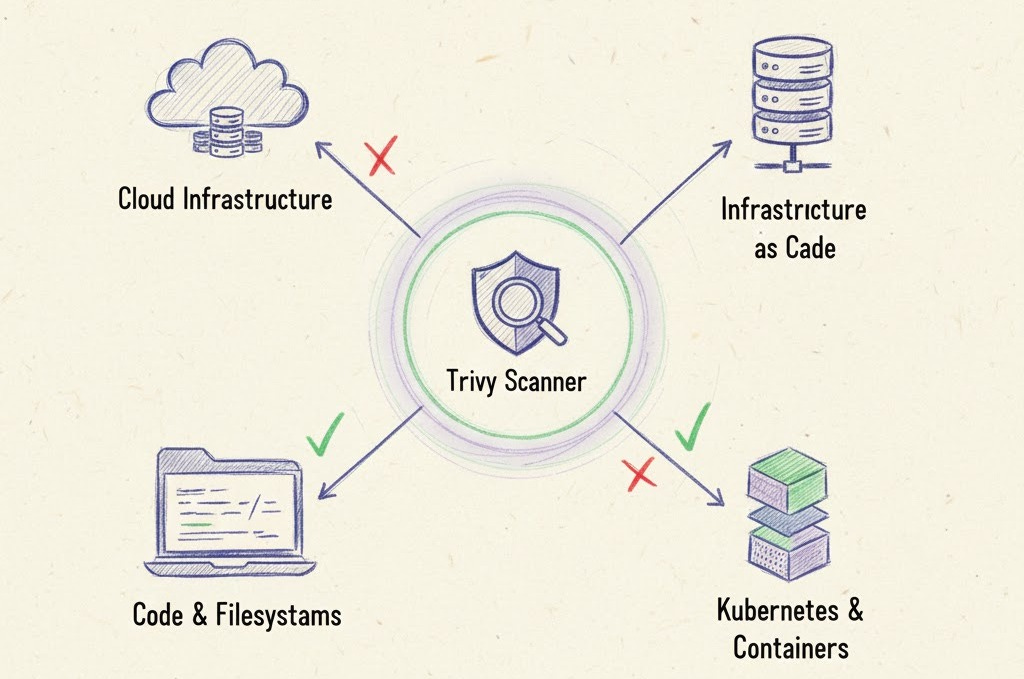
Trivy is an open-source security scanner created by Aqua Security. It helps teams find vulnerabilities, misconfigurations, secrets, and license issues across many parts of the software supply chain. It is fast, easy to use, and works well in both local development and CI/CD pipelines.
This article explains what Trivy is, what it scans, and why many security and platform teams rely on it.
What is Trivy?
Trivy is a comprehensive security scanning tool. Instead of focusing on a single area, Trivy scans multiple targets and reports multiple types of security issues in a single place.
With Trivy, you can scan:
Container images
Local filesystems
Git repositories (local or remote)
Kubernetes clusters
Virtual machine images
Cloud infrastructure configurations
And Trivy can detect:
Known vulnerabilities (CVEs)
Operating system packages and dependencies (SBOM)
Misconfigurations in IaC files
Hardcoded secrets and sensitive data
License compliance issues
This wide coverage makes Trivy suitable for both developers and security teams.
Why Trivy is Popular
Trivy is popular because it focuses on simplicity without sacrificing depth.
Here are some key reasons teams choose Trivy:
Easy to Install
You can install Trivy using Homebrew, Docker, or by downloading a single binary. There is no complex setup process.
Fast Scanning
Trivy is optimized for speed. Even large container images can be scanned quickly, which is important for CI pipelines.
Clear Output
The scan results are easy to read. Vulnerabilities are grouped by severity and include clear descriptions and references.
Strong CI/CD Integration
Trivy works well with GitHub Actions, GitLab CI, Jenkins, and other CI systems. Many teams use it as a security gate before deployment.
Active Open-Source Community
The project is actively maintained, with frequent updates and strong community contributions.
What Can You Scan with Trivy?
Container Images
Trivy scans container images for OS-level and application dependencies. This helps identify outdated or vulnerable packages before images reach production.
Example:
trivy image python:3.12-alpineFilesystem and Source Code
You can scan local directories to find vulnerable dependencies, secrets, or misconfigured IaC files.
Example:
trivy fs .Kubernetes Clusters
Trivy can scan Kubernetes resources and report security issues at the cluster level.
Example:
trivy k8s clusterInfrastructure as Code (IaC)
Trivy supports Terraform, CloudFormation, Kubernetes YAML, Helm charts, and more. This helps teams catch security issues early, before infrastructure is deployed.
Trivy in DevSecOps Workflows
Trivy fits naturally into DevSecOps practices.
Everyday use cases:
Scanning container images during build time
Blocking deployments when critical vulnerabilities are found
Generating SBOMs for compliance and audits
Scanning pull requests for IaC misconfigurations
Supporting FedRAMP, SOC 2, and internal security controls
Because Trivy can run locally, developers can fix issues early instead of waiting for security reviews later.
Canary Builds and Production Safety
Trivy provides canary builds that are generated on every commit to the main branch. These builds allow users to test the latest features early.
However, canary builds may contain breaking changes or bugs. They are useful for testing and experimentation but are not recommended for production environments.
Trivy vs Commercial Tools
Trivy is open source, but it is not limited. Many enterprise teams use Trivy alongside commercial security platforms.
In fact, some commercial tools build on top of Trivy to provide:
Centralized dashboards
Policy enforcement
Long-term vulnerability tracking
Enterprise support
This makes Trivy a strong foundation, whether you stay fully open source or move toward enterprise solutions later.
Final Thoughts
Trivy is a practical and reliable security scanner for modern software teams. It covers containers, code, infrastructure, and cloud environments in a single tool. Its simple design makes it easy to adopt, while its depth makes it valuable for serious security work. If you are starting with DevSecOps or improving an existing security program, Trivy is a tool worth adding to your workflow.


