

A new class of AI models has arrived, claiming to “think before it speaks.” AI reasoning models like OpenAI’s o1 and o3 spend time working through a problem step by step before giving you an answer. The marketing is compelling. But are they actually smarter — or just slower?
The honest answer is: it depends on what you mean by smart.
What Are AI Reasoning Models?
Standard LLMs (Large Language Models — text-generating AI systems trained on massive datasets) generate output token by token, immediately. You ask a question; they start answering right away. There’s no pause to check the logic.
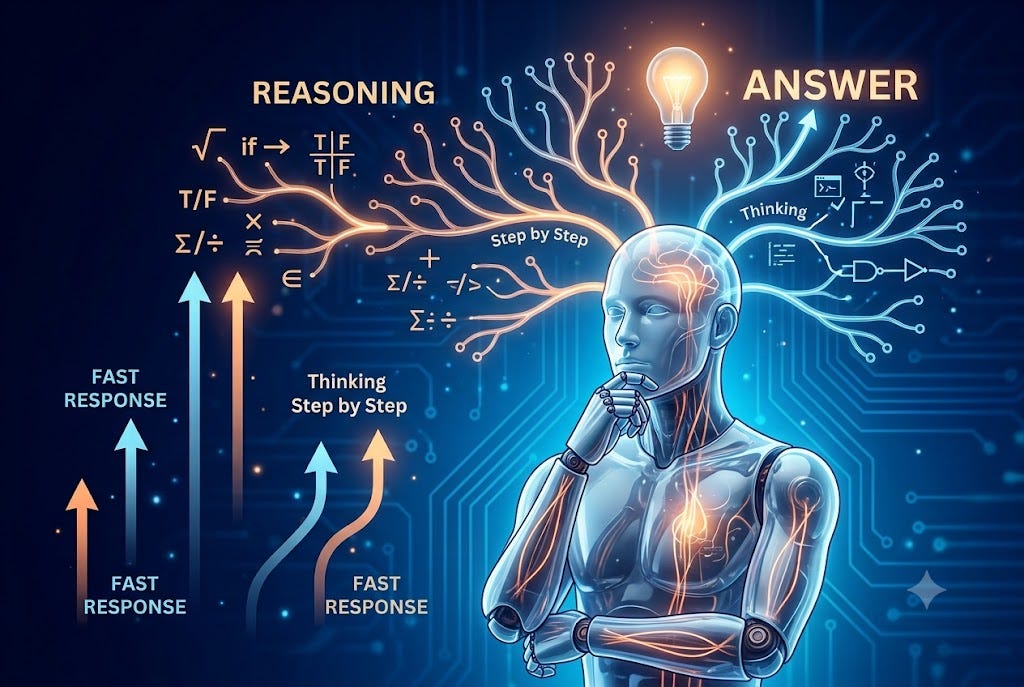
AI reasoning models work differently. Before producing a final answer, they generate an internal chain of reasoning — a scratchpad of intermediate steps. Only after working through those steps do they produce a response. OpenAI calls this “thinking” and exposes it as a visible reasoning trace in some interfaces.
This approach is based on a technique called chain-of-thought (CoT) prompting — asking a model to “think step by step” before answering. Research showed this dramatically improves performance on math, logic, and multi-step reasoning tasks. Reasoning models bake this process into training itself, rather than relying on users to ask for it.
